
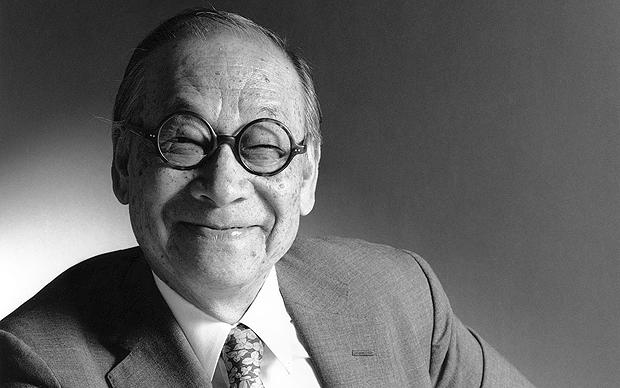
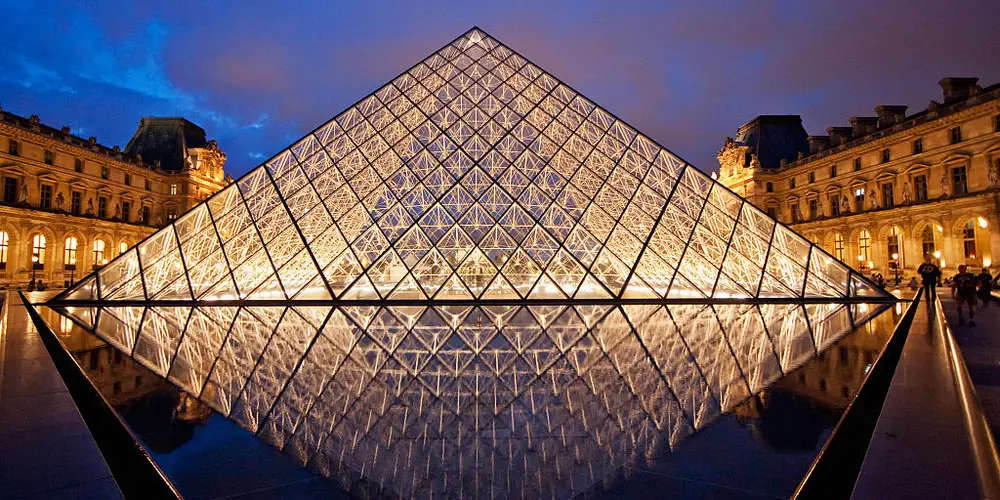
Left: I.M. Pei by RIBA // Right: Louvre Pyramid by Gettty Images
Gathering Our Inspiration
I.M. Pei
A Bold Bridge Between Eras
The Louvre is one of the world’s greatest cultural institutions, with layers of architectural history spanning centuries. In 1989, I.M. Pei introduced the striking glass pyramid at the main courtyard — a modernist jewel amidst Renaissance and classical forms. Initially controversial, the pyramid now serves as a transparent gateway that unifies the museum’s complex program while inviting light and movement.
The Louvre Pyramid inspires us to embrace contrast and clarity — balancing respect for tradition with bold innovation. At Meraki, we see every project as a dialogue between past and future, form and function, art and craft. Like Pei’s pyramid, we strive to create design moments that are at once purposeful and poetic, timeless yet forward-looking.
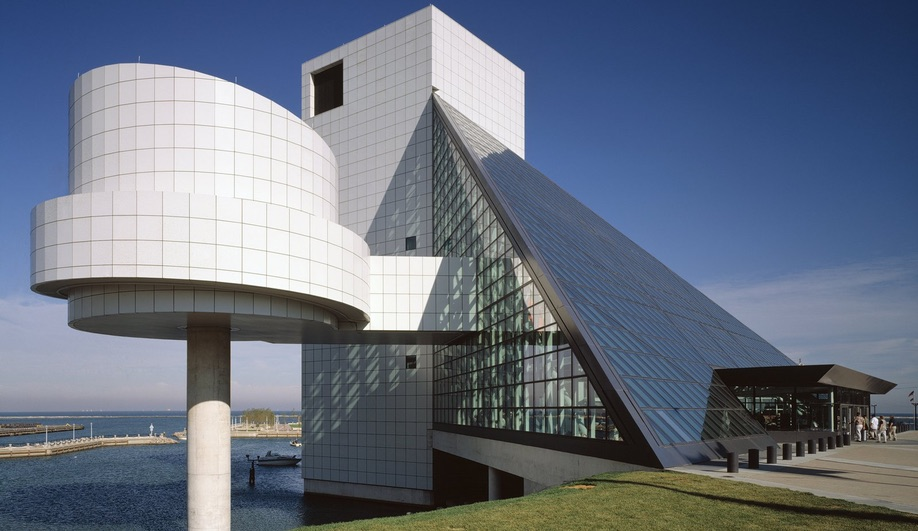
Rock and Roll Hall of Fame in Cleveland by I.M. Pei
Few architects have shaped the skyline with the precision and elegance of I.M. Pei. Known for his bold use of geometric forms, masterful blending of modernist clarity with cultural context, and a portfolio that spans continents, Pei’s work redefined architectural possibilities. Pei believed architecture should be both a work of art and a vessel for life—a philosophy evident in every sharp angle, transparent surface, and perfectly proportioned space he created. His legacy isn’t just in buildings—it’s in the dialogue between past and future that his designs continue to inspire.
Like Pei, we believe in respecting the past while looking forward. Our work—especially in renovations and adaptive reuse—echoes his sensitivity to surroundings and bold yet respectful intervention.
Pei’s work reminds us that clarity and legacy can coexist. In our own projects, we often start by asking, ‘What is already speaking here—and how can we make it stronger?’