
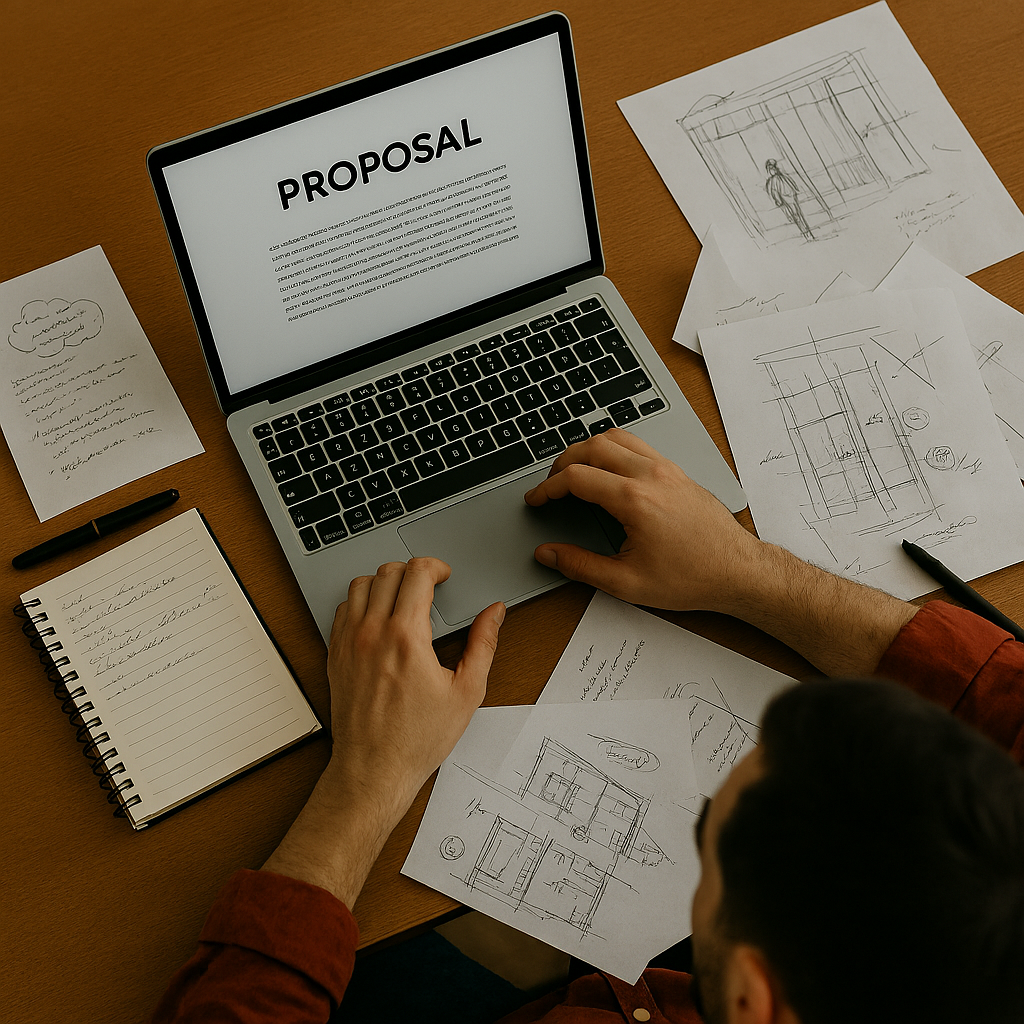
Proposals: Reading Between the Lines
Preparing a new proposal is never just a clerical task, it’s a creative, strategic, and deeply human process. At Meraki Architects, we treat each proposal as a reflection of our philosophy: soul, creativity, and care. It’s not just about outlining deliverables or listing services. It’s about translating a conversation into a vision, and a vision into a roadmap.
Every proposal starts with a meeting. Regardless of format, we listen—not just to what’s said, but to what’s implied. The client may describe their goals in terms of square footage, budget, or timeline, but behind those metrics are deeper intentions: a desire to create community, to elevate care, to solve a problem that’s never been solved quite this way before.
Translating the client’s spoken needs into a clear, actionable scope is a time-consuming part of proposal development. It’s not just about listing rooms or functions. It’s about interpreting tone, identifying gaps, and capturing the emotional undercurrent of the project.
This process often involves revisiting meeting notes, sketching out workflows, and mapping priorities that weren’t explicitly stated. It’s a form of architectural empathy—deciphering the hidden intent behind words to ensure the final design doesn’t just meet expectations but exceeds them.
Once the scope is clear, we begin shaping the proposal narrative. This includes:
• A tailored project description that reflects both technical needs and emotional drivers
• A phased approach that aligns with client priorities and funding realities
• Visuals that reinforce clarity and confidence
• Language that speaks to the client’s sector, audience, and aspirations
We don’t use boilerplate. Every proposal is bespoke—because every client is unique.
Understanding client intent is the cornerstone of a successful project. It’s what allows us to design spaces that feel intuitive, purposeful, and personal. When we get the scope right—when we truly understand what the client is asking for, even if they don’t have the words for it—we lay the foundation for trust, collaboration, and impact.
At Meraki, we believe architecture begins long before the first sketch. It begins with listening, interpreting, and caring enough to read between the lines.