Licensure in architecture has always been more than a credential—it’s a rite of passage. It marks the moment when curiosity, discipline, and design converge into professional responsibility. And like architecture itself, the process has evolved.
In the 1970s, the Architect Registration Examination (ARE) was a four-day marathon. Nine divisions tested everything from site planning to building systems, culminating in an all-day design vignette—a hand-drawn synthesis of everything you’d learned. It was immersive, communal, and analog.
Today, the ARE is digital and streamlined into six divisions, each aligned with real-world project phases. The shift reflects a changing profession—more integrated, more agile, but no less demanding. Case studies and interactive questions now replace vignettes, but the core remains: proving you can think like an architect under pressure.
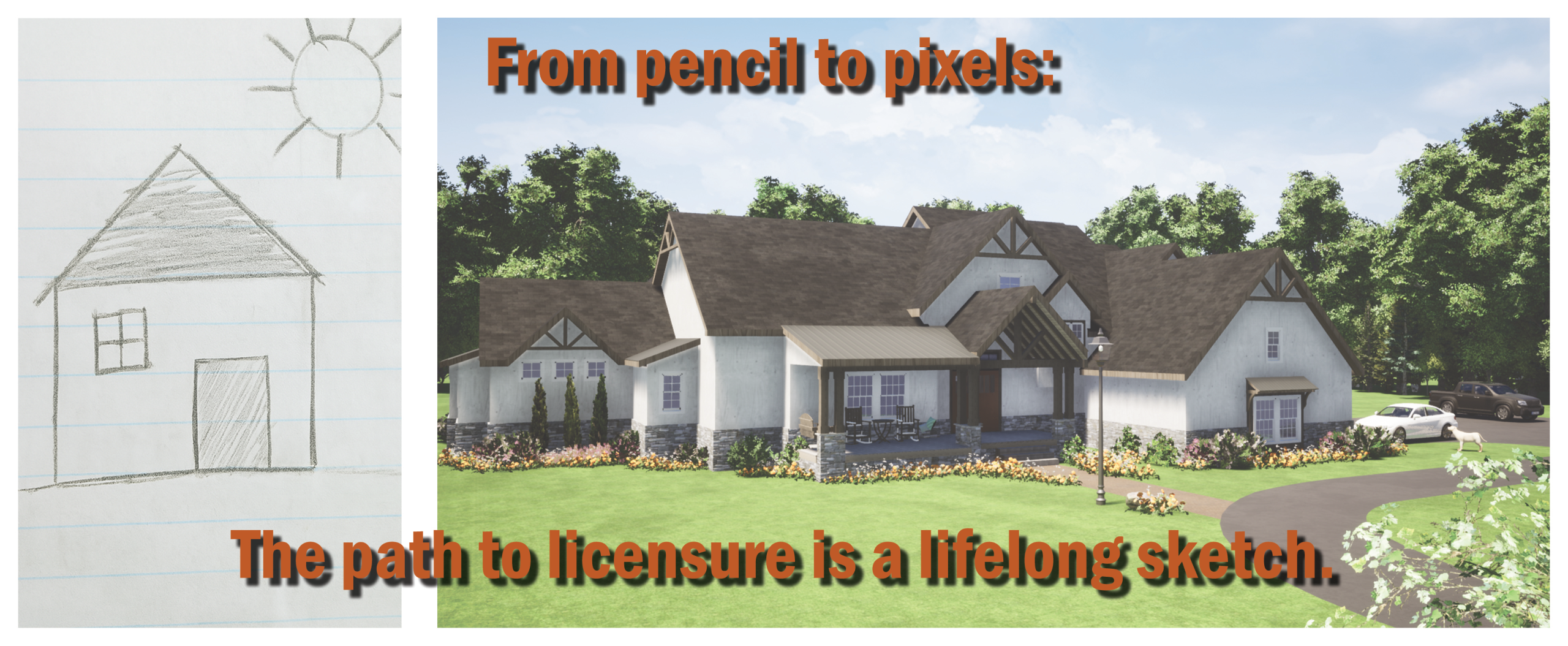
For me, the process began long before the ARE. As a kid, I was captivated by construction sites and sketchbooks—drawn to the tension between structure and soul. I dove into every art class in elementary school, then drafting in high school, where pencil met paper and lineweights taught discipline. Math came naturally, and later, so did physics and structural theory—tools to make ideas stand.
Licensure wasn’t a decision I made in college. It was the culmination of a lifelong pursuit: to merge delicate art with not-so-delicate construction into spaces that evoke wonder and curiosity. Becoming an architect isn’t just about passing exams. It’s about honoring the process that shaped you—and using it to shape the world.